 Skip to content

Yes, if the property owner knew about the wet floor or should have known and failed to clean it up or warn you. Florida law does not make an owner automatically responsible for every fall on their property. You have to show their carelessness caused your injury.
Wet floor falls are one of the most common types of premises liability cases a West Palm Beach slip and fall lawyer handles, and one of the harder ones to prove, because the puddle gets mopped and the video gets overwritten within days. Acting early preserves your ability to file a personal injury claim later.
When is a property owner liable for a wet floor?
Liability turns on knowledge. Under Florida Statute § 768.0755, someone who slips on a transitory foreign substance in a business has to prove the business knew about it, or should have: the spill sat there long enough that reasonable staff would have found it, or spills there were regular enough to be foreseeable.
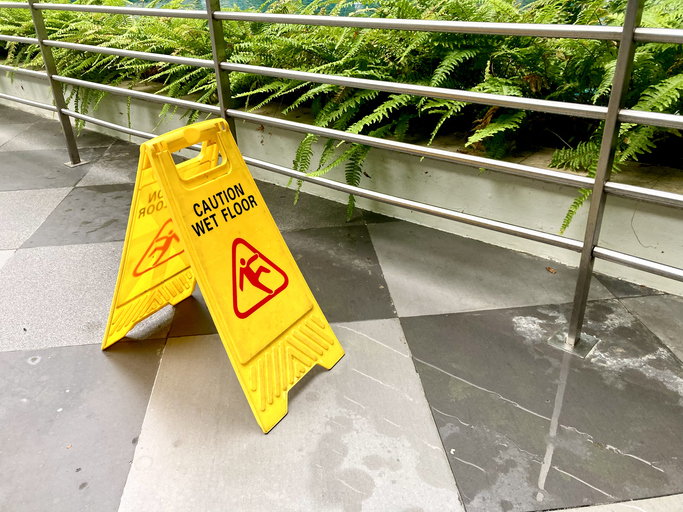
In other words, water tracked in from a storm thirty seconds before you walked through probably is not the store’s fault. That same puddle two hours later, with cart tracks through it, is a very different slip and fall case. When a property owner fails to mop a spill or set out a wet floor sign, that maintenance failure is what the claim rests on.
What if you were partly at fault?
Your recovery drops by your share of the blame, and past a certain point it disappears. Florida Statute § 768.81 bars anyone found more than 50 percent at fault from recovering damages at all. On a $200,000 claim, 20 percent fault leaves $160,000. At 51 percent leaves nothing. Much of a fall claim gets argued over that percentage.
Does homeowners insurance cover a fall at someone’s house?
Usually, for guests. Standard Florida homeowners policies carry personal liability coverage plus a medical payments provision, commonly $1,000 to $5,000, that covers a visitor’s initial treatment without a finding of fault. Neither covers residents of the household. Insurance companies pay these claims, not your friend out of pocket.
What compensation can you recover?
Medical bills, lost wages, out-of-pocket costs, and pain and suffering, along with emotional distress where the record supports it. Falls that cause traumatic brain injuries or spinal damage also support future care and lost earning capacity, which in the long term often dwarfs the emergency room bill.
How long do you have to file a slip and fall lawsuit in Florida?
Two years from the date of the fall. Florida Statute § 95.11(5)(a) sets a two-year statute of limitations on negligence actions, cut from four years for claims accruing on or after March 24, 2023. Falls on city or county property add a written notice step under Florida Statute § 768.28 before a personal injury lawsuit can proceed.
What should you do after you slip on a wet floor?
Evidence of the property owner’s negligence has a short shelf life.
- Report the fall to a manager and ask for a copy of the incident report, since it locks in the date, time, and location before memories shift.
- Photograph the spill and whether a warning sign was out, because a crew will mop the area within minutes.
- Collect names and numbers for witnesses and employees on shift, since turnover makes them hard to find months later.
- Seek medical attention the same day even if you feel functional, because your medical records are what tie the injury to the fall.
Talk with a West Palm Beach attorney about your fall
Lytal, Reiter, Smith, Ivey & Fronrath has represented injured Floridians for more than 40 years, from its West Palm Beach office at 500 S South Australian Avenue and six others statewide. We work on a contingency fee basis, so you pay no attorney’s fees unless compensation is recovered.
If you fell at a Palm Beach County business or apartment building, call (561) 655-1990 for a free consultation or contact us online.